His OHIP card paid up to $400 a day. The Florida hospital ran a meter that spun far faster.
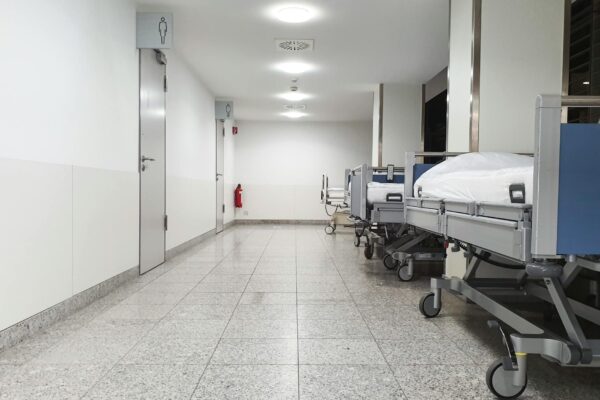
Picture a 58-year-old from Scarborough on a February trip to Florida. Third morning, walking the boardwalk after breakfast, his chest goes tight and his left arm feels wrong. His wife calls 911. By noon he’s in a cardiac unit, wired up, being told he’ll stay at least two nights for observation.
He’s not panicking about the medicine. He’s panicking about the bill — and then he tells himself not to, because he has OHIP, and he’s paid into it his whole working life.
That’s the trap. OHIP came with him to Florida. It just barely got off the plane.
What your provincial plan actually pays out of country
For an acute, unexpected, and medically necessary emergency outside Canada, Ontario’s OHIP pays up to $200 a day for a lower level of inpatient care, and up to $400 a day for an operating room, coronary care unit, intensive care unit, or neonatal or pediatric special care unit. For emergency outpatient care, it pays up to $50 a day. Doctor services are paid up to Ontario rates.
Now hold that against what a US hospital charges. By the industry figures used across the travel-insurance world, the average US hospital day runs around $16,000. Not the surgery. Not the specialists. Just the day.
So our man in the cardiac unit has OHIP contributing up to its maximum of $400 a day plus doctor services up to Ontario rates. The hospital is running a meter that spins at much higher foreign rates. He is responsible for the remaining gap. All of it.
That’s the punchline: provincial and territorial health plans cover only a small fraction of the cost of an out-of-country medical emergency. The card in your wallet is real, the coverage is real, but abroad it is often not nearly enough.
A mental model: OHIP is a coupon, not a card
The moment you cross the Canadian border, think of your provincial plan as a set of small, fixed coupons rather than a full insurance card. OHIP caps emergency inpatient care at $200 or $400 a day depending on the hospital unit, and outpatient services at $50 a day. While doctor services are paid up to Ontario rates, the hospital daily limits are fixed and do not scale with your actual hospital bill. The hospital does not care that you have it.
Travel emergency-medical insurance is the part that scales. It’s built to sit on top of whatever the provincial plan pays and cover the real number behind it.
To put a frame around “the real number,” here’s a real documented claim. A 76-year-old traveller developed gallstones and spent five days in hospital. The insurer paid $15,459.78. Gallstones. Five days. Fifteen and a half thousand dollars. Now picture cardiac care instead: an ambulance, a specialist, days in a unit, and a flight home with a medical escort.
What a real travel-medical plan carries
The Traveller plan — the emergency-medical product Sacraw Financial distributes, provided through licensed, regulated Canadian insurers — is built precisely for this gap. The headline:
- Emergency-medical maximum: $5,000,000 CAD, with no upper age limit.
- It covers the hospital, the physician, the ambulance (ground, air, or sea), the diagnostics at the time of the emergency, and prescriptions following it.
- If things go badly, it reaches the parts of the bill people never picture: medical air evacuation back to Canada or the nearest equipped facility, and repatriation — including up to $6,000 toward burial or cremation, plus travel for a family member who has to come identify a body.
Five million on one side, a couple hundred a day on the other. That’s the actual choice you’re making at the airport, whether you realise you’re making it or not.
Here’s the part that bites
There’s a detail in how these plans work that’s easy to miss, and it matters for exactly the person in our story. On the Traveller plan, your deductible applies to whatever is left after your provincial plan pays. The structure assumes OHIP goes first, pays its small share, and the insurance handles the mountain behind it. Pull the insurance out of that stack and there’s nothing catching the mountain.
And one more worth knowing. The Traveller plan is for Canadian residents who actually hold a provincial or territorial health plan. It’s designed to ride on top of OHIP, not replace it. There’s even a clause: if you don’t have a government health plan in force at the time of a claim, medical expenses are capped at $50,000 — a reminder that this product expects you to be a covered resident, and then covers the catastrophe your provincial plan can’t.
So what do you actually do about it
Not this: assume the card in your wallet has you. It pays a small fraction of the cost into a system that bills at much higher foreign rates. That spread is an expensive misunderstanding in Canadian travel.
You don’t need to memorise the policy wording. You need the shape of it: provincial plans cover only a small fraction of costs out of country; an emergency medical plan carries up to $5,000,000 to help cover eligible expenses. The right deductible, the right plan, and the price all depend on your age, your trip length, and where you’re going — which is why the number comes from your trip, not a billboard. Premiums are priced to the trip.
This is general information about how the coverage works, not advice for your specific health history — the point is just to make the gap visible so you can decide.
If you want to see the plans side by side — what’s covered, the limits, how the deductible stacks on top of OHIP — compare them at sacraw.com/coverage/. Sacraw Financial is an FSRA-licensed insurance agency in Ontario: we show you the actual coverage, price it to your trip in a couple of minutes, and stay in the file when you claim.
Your OHIP card is coming on holiday with you regardless. The only real question is whether anything’s coming with it.
Questions travellers ask
How much does OHIP cover outside Canada?
For unexpected emergencies, OHIP pays doctor services up to Ontario rates, up to $200 a day for a lower level of inpatient care, up to $400 a day for an operating room, coronary care unit, intensive care unit, or neonatal or pediatric special care unit, and up to $50 a day for emergency outpatient services. Overall, provincial plans cover only a small fraction of emergency medical costs outside Canada, leaving travellers responsible for the remaining balance.
What coverage limits does the Traveller plan offer?
The Traveller plan provides up to $5,000,000 CAD in emergency medical coverage with no upper age limit. It covers hospital care, physicians, ambulance transport by ground, air, or sea, diagnostics, prescriptions, and medical air evacuation back to Canada, sitting directly on top of what your provincial plan pays.
What happens if you do not have a valid provincial health plan?
The Traveller plan is designed to ride on top of your provincial coverage rather than replace it. If you do not have a government health plan in force when you make a claim, your emergency medical expenses are capped at $50,000 instead of the standard maximum.
How does the deductible work with provincial coverage?
On the Traveller plan, your deductible applies to whatever balance remains after your provincial health plan pays. Provincial coverage pays its small daily portion first, and the emergency medical plan steps in to cover the rest of the bill up to the five million dollar policy maximum.
Planning your next trip?
Up to $5,000,000 in emergency medical coverage. Get your price in 2 minutes.
Get my price